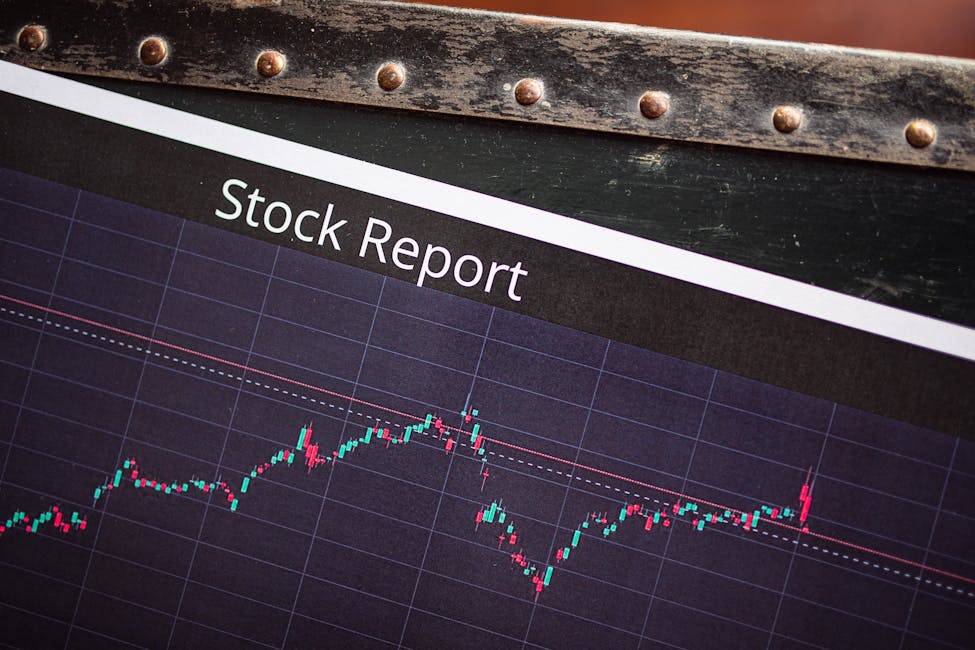
The stock market is often seen as a barometer for the economic health of a nation. As we witness fluctuations in stock prices, investors find themselves navigating through a maze of data, particularly when it comes to indicators like inflation. Recently, the stock markets have exhibited a mixed response to the latest inflation data, sending conflicting signals to traders and analysts alike. This situation calls for a deeper understanding of how inflation impacts stock market performance and what it means for investors in the coming months.
What is Inflation and Why Does it Matter?
Inflation refers to the general increase in prices of goods and services over time, leading to a decrease in purchasing power. It is measured using various indices, with the Consumer Price Index (CPI) being one of the most widely used. Understanding inflation is crucial for several reasons:
- It affects consumer spending, which drives economic growth.
- It influences interest rates set by central banks.
- It has a direct impact on corporate profits and valuations.
The Recent Inflation Data
In recent weeks, inflation data released by government agencies has shown a mixed picture. While some sectors are experiencing rising prices, others appear to be stabilizing or even declining. This duality can create confusion among investors as they attempt to interpret the broader implications for the economy and the stock market. For example:
- The price of essential goods like food and energy may be increasing, impacting consumer budgets.
- On the other hand, prices for durable goods may be showing signs of stabilization, indicating a potential easing of supply chain issues.
How Inflation Influences Stock Markets
Inflation has a complex relationship with the stock market. Generally, moderate inflation can be a sign of a growing economy, but excessive inflation often leads to uncertainty. Here are some ways inflation affects stock markets:
- Interest Rates: Central banks may raise interest rates to combat high inflation, which can lead to higher borrowing costs for consumers and businesses, potentially slowing down economic growth.
- Consumer Spending: As inflation rises, consumers may cut back on spending, which can negatively impact corporate earnings and stock prices.
- Sector Performance: Different sectors react differently to inflation. For instance, commodity-related stocks may benefit from rising prices, while tech stocks may struggle if borrowing costs increase.
The Current Market Reaction
The stock market’s mixed performance in light of recent inflation data highlights the uncertainty that investors face. Some sectors, such as energy and commodities, have experienced gains as prices for those goods increase. Conversely, growth-oriented sectors like technology have faced headwinds as investors recalibrate their expectations for future earnings. This dichotomy has led to a volatile trading environment where market participants are constantly reassessing their strategies.
Strategies for Investors in a Mixed Market
For investors navigating through this mixed market influenced by inflation data, it is essential to adopt strategies that consider both current trends and future uncertainties. Here are some practical approaches:
- Diversification: Spread investments across various sectors to mitigate risks associated with inflation’s uneven impact.
- Focus on Value: Look for undervalued stocks that may perform well even in inflationary environments.
- Stay Informed: Keep an eye on economic indicators and central bank policies to make timely investment decisions.
Conclusion
The stock markets are currently experiencing a complex interplay of inflationary pressures and economic signals, leading to mixed performance across different sectors. Understanding how inflation affects the economy and the stock market is vital for making informed investment decisions. By adopting a diversified and informed investment strategy, investors can better navigate the uncertainties of the current economic landscape. As inflation data continues to evolve, staying adaptable and aware will be key to achieving long-term financial goals.